A Vision Sustained
I met Sarah shortly after Christmas, when winter had stopped pretending it would be kind. The lights were gone. The calendar had turned. What remained was cold. The honest kind, the kind that presses its weight into bone and breath and refuses to soften.
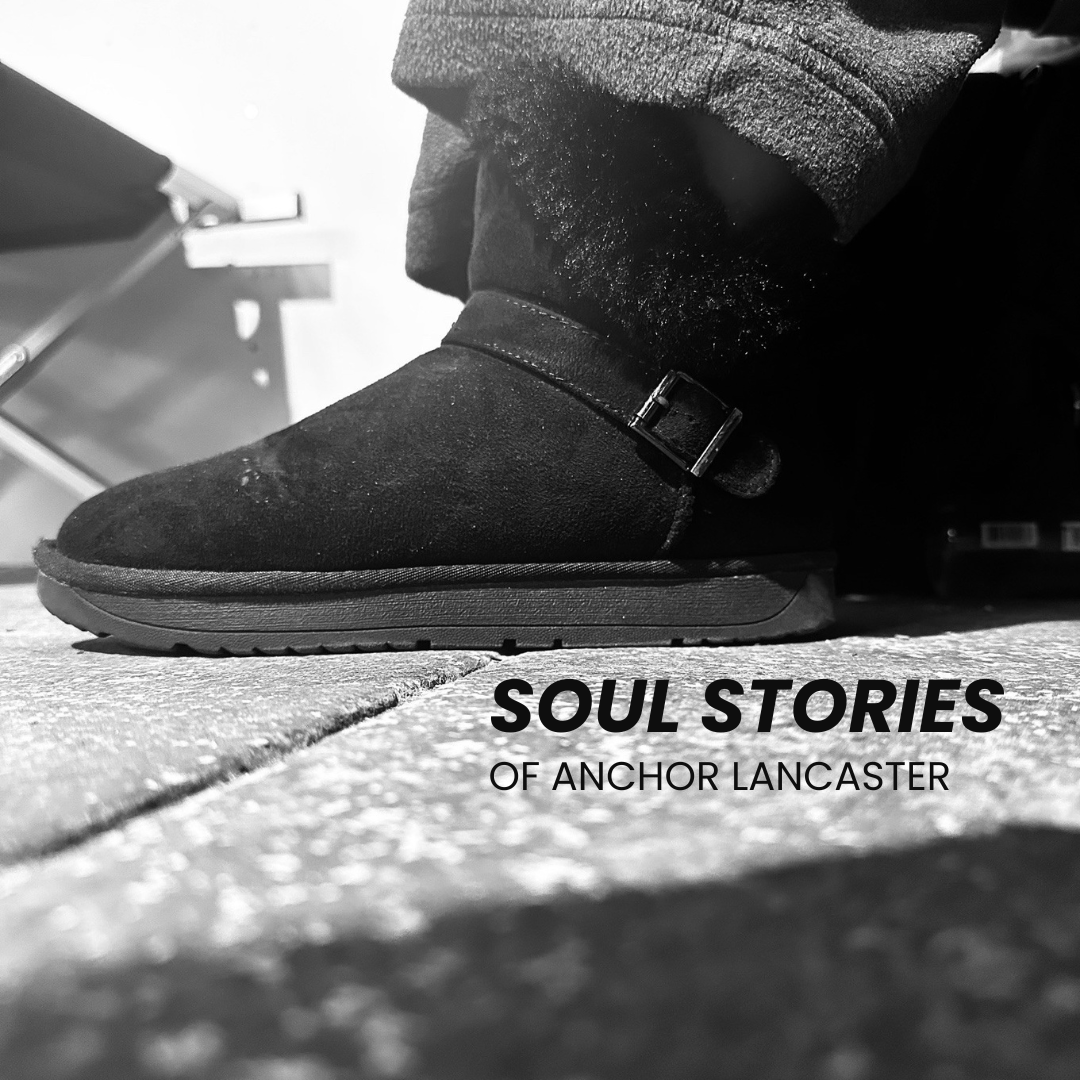
She sat on her cot in the Day Center, the room still blue with morning. Her shoes were tucked beneath it, soles worn thin, faithful to miles that had not been gentle. I pulled a chair close, careful not to stand. Sitting felt right. Equal height. Shared air.
Sarah spoke without ornament. Her voice carried no drama, only distance—the sound of someone who has already crossed the sharpest edge of grief and learned how to live inside its echo.
She was born here. Raised here. Lancaster has always been her map. She married here, settled here, trusted—as most of us do—that the life she was building had ballast. Rent paid. Marriage intact. The invisible agreements that make a life feel solid enough not to question.
In 2024, she came home to an eviction notice taped to the door.
That was how she learned the rent hadn’t been paid. The truth arrived without warning, without mercy, without explanation. Soon after came another revelation: her husband was leaving the marriage to pursue another relationship. The home went. The future followed. What Sarah described was not an explosion but an erosion—her life thinning, loosening, dissolving faster than she could gather it back into shape.
Loss did not arrive alone. It brought companions.
Somewhere inside that unraveling, Sarah found Anchor.
She calls it Breakfast Club. I’ve heard the phrase before—light, affectionate—but when she said it, it settled differently. She remembered her first breakfast with startling clarity. Cheesy eggs with ham. She smiled when she said it, the way people do when a memory steadied them at exactly the right moment.
Still her favorite.
At a time when covenant had collapsed under the weight of secrecy, she found something unexpectedly sturdy: a table that waited. A room that did not ask for explanation. People who expected her to return.
Scripture circles this truth again and again: we are not made to endure alone. Fellowship is not sentimental. It is structural. Sarah didn’t quote that. She lived it. When nearly everything familiar had been stripped away, she was still known. Still greeted. Still held in rhythm.
As she spoke, she told me something she nearly brushed past, as if it were incidental.
Before her life fell apart, she was the friend who opened her door. The one who let others stay. The one who handed out hats and gloves when winter sharpened its teeth. She said it simply, without pride, as a fact of who she had been.
That morning at Anchor, gloves had been donated. Clean. New. Folded neatly. Sarah was holding a pair as she spoke—turning them over, pressing the lining between her fingers, tracing the seams as if committing them to memory.
I knew why she was telling me this.
Now, she said softly, she is the one receiving them.
Loss continued to gather. That same year, she lost her dog. Later, the car she’d been using for shelter was gone too. She spoke plainly about sleeping outside—about cold that crawls inward and settles, about nights that refuse to end, about how survival shrinks the world until it contains nothing but the next hour.
Nearly a year after her life first splintered, just as she felt she was finding her footing again, something else gave way.
Walking to Anchor one morning, Sarah lost her eyesight.
Not gradually. Not symbolically. Suddenly. Long exposure and untreated strain converged. Darkness arrived whole. She was hospitalized. Time slowed to a drip. Treatment followed. Slowly—unevenly, mercifully—some vision returned.
Since then, the Anchor’s Breakfast and Day Center have become more than shelter. Anchor has been scaffolding and spine. Nutrition. Case management. Coordination with Penn Medicine. Help replacing documents lost to the street—papers most of us don’t notice until they disappear. Someone sitting beside her to complete forms she could no longer see clearly. Someone ensuring she could get where she needed to go.
She told me she had renewed her driver’s license. A small sentence. A heavy victory. With her vision still fragile, she is now working toward disability benefits. The process is slow. Bureaucratic. Unforgiving. Nothing happens quickly. Nothing happens alone.
When I asked what she wished people understood about homelessness, she didn’t pause.
She said she wished people knew what she hadn’t—that when she was the one handing out hats and gloves, she never imagined she might one day need them herself. She looked down at the gloves resting in her hands.
Everyone, she said, is one bad day away from losing it all.
“So just be nice.”
Sarah’s story does not close neatly. She is still rebuilding. Still waiting. Still learning the humility of receiving what she once gave freely.
But she is not unseen.
She has a place where her absence would be felt. A breakfast she anticipates. A room that knows her name. A community that understands the fragile exchange between giving and receiving.
Scripture says that when one falls, another is there to help them back up. Sarah did not fall alone.
Her vision is still tender. Her future still forming. But what surrounds her now is not darkness.
It is presence.
It is fellowship.
It is daily bread—and on one winter morning, a pair of gloves—placed gently into hands that have both given and received.
And sometimes, this is how God completes the circle:
not by sparing us the fall, but by ensuring we are never left there—
teaching us that both giving and receiving are acts of faith formed by the same faithful God.